
김규옥 展
Growth
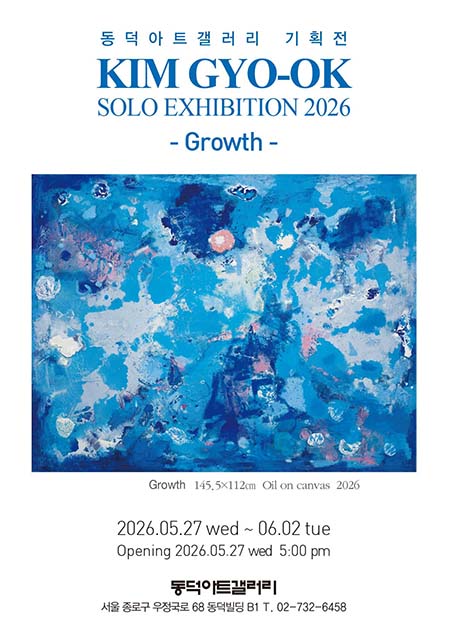

2026. 5. 27(수) ▶ 2026. 6. 2(화)
Opening 2026. 5. 27(수) pm 5
서울특별시 종로구 우정국로 68 동덕빌딩 B1 | T.02-732-6458
놀이로 그림을 그립니다.
내면에 들어있는 창조력을 마음껏 발산해 멋진 그림이 탄생하길 소망합니다.
설명서가 필요 없어요.
전시장에 들어서면 작가의 그림이 아닌 관객(고객)들의 작품이 됩니다.
마음껏 즐기고 누리시면서 감상하시고 여러분의 몫을 많이 챙겨가시기 바랍니다.
- 작가 드림
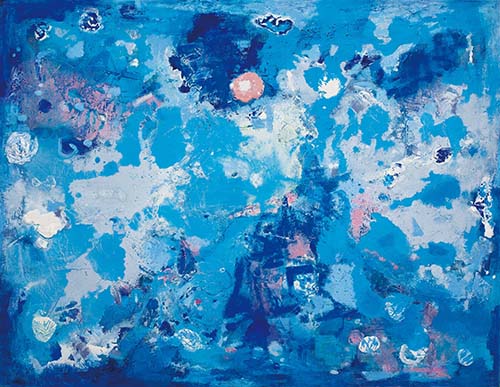
Growth_145.5x112cm_Oil on canvas_2026
시간과의 대화, 안온한 치유를 위한 기도
김상철
전 동덕여대 교수, 미술평론
작가의 작업은 분방하고 현란한 색과 면들에서 발산되는 강렬한 시각적 자극이 인상적이다. 그것은 특정한 사물이나 상황을 드러내지 않는 전형적인 추상의 형식을 지니고 있지만 작가가 이러한 형식을 특별히 의식하고 있다고 여겨지지는 않는다. 그것은 일종의 작가 내면에서 발현되는 본질적인 것의 표출이라 함이 옳을 것이다. 그만큼 작가의 작업은 특정한 형식이나 틀로 규정하기보다는 서로 다른 감성과 개별적인 의식의 기록이라 여겨질 정도로 다양하고 다변하다.
이러한 작업 양태는 흔히 심상, 혹은 심상의 표현이라는 말로 형용되곤 한다. 심상이란 말 그대로 감각에 의하여 획득한 현상이 마음속에서 재생된 것을 말한다. 작가는 가장 큰 작업의 동인은 바로 일상에서 확인되는 소소한 것들에 대한 기록이라 말한다. 이러한 일상의 기록은 작가의 내면을 통해 걸러지고 편집되어 특유의 감성적인 색채 표현으로 표출되는 셈이다. 사실 작가의 화면은 분방하고 자유로우며 거침이 없다. 이는 직관의 감정표현을 바탕으로 이루어지는 일련의 과정을 거쳐 구축되는 작가 특유의 심미이다. 작가는 작업을 마치 놀이처럼 대한다고 말한다. 놀이의 특징은 무목적성이다. 목적이 없기에 자유롭고, 집착이 없기에 구애되지 않는다.
사실 작가의 이러한 작업관과 작업 방식은 동양적 사유와 매우 밀접하게 잇닿아 있다. 놀이는 흔히 유(遊)로 표현되며, 이해득실을 포함한 모든 세속적인 가치를 초월하는 자유로운 경지이다. 이에 이르기 위해서는 당연히 세속적인 가치를 초월하기 위한 필연적인 과정이 필요하다. 그것은 흔히 심재(心齋)와 좌망(坐忘), 즉 마음을 차분히 가지런히 하고 앉은 채 모든 것을 고스란히 잊는 것이다. 아마 작가는 일상에 대한 차분하고 애정 어린 시선과 감사의 기도를 통해 이러한 과정을 수행한다. 이를 통해 자신의 존재를 확인하고 이에서 얻어지는 내적 평화가 선한 영향력으로 발휘되기를 바라는 것이다.
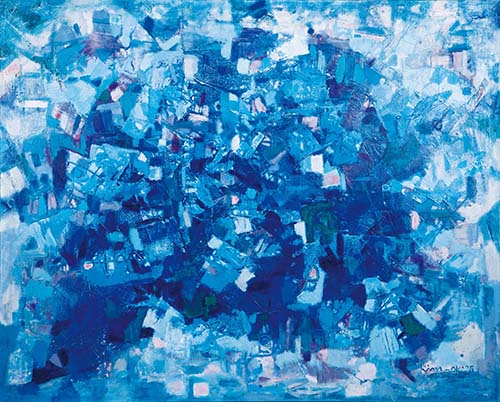
Growth_162.2x130.3cm_Oil on canvas_2025
작가의 작업은 특정한 형식이나 내용으로 규정할 수 없는 자유롭고 다양하며 분방하다. 그러나 그의 작업은 분방하지만 난잡하지 않고, 자유롭지만 어지럽지 않다. 이는 형식에 대한 추종이나 조형에 대한 욕심에 앞서 놀이로 대변되는 심리적 요건이 전제되기 때문이라 여겨진다. 그러므로 작가의 화면은 일정한 질서와 통일을 지향하는 조화와 균형의 심미를 보여준다. 즉 작가의 작업은 질서를 가진 색채들로 이루어진 진솔하고 내밀한 일상의 기록이라 할 것이다.
작가는 정통적인 유화(Oil painting)를 작업의 바탕으로 삼고 있다. 아크릴이라는 효과적이고 편리한 재료가 이미 개발되었음에도 불구하고 굳이 유화를 선택함은 바로 작가의 섬세한 감성에 의해 포착된 무게와 깊이의 문제이다. 유화는 더디 마른다. 이는 유화의 단점이나 불편함이라 할 수 있으나 작가는 오히려 이를 통해 시간과의 만남을 꾀한다. 즉 마르는 과정에서 화면과 마주 앉아 무언의 대화를 나누는 과정을 통해 작업한 과정의 결과 속에서 다시 또 다른 영감을 찾는 것이다. 작가의 화면은 매우 두텁다. 이는 바로 이러한 과정들을 통해 영감에 영감이 더해져 그림 속에서 또 그림을 찾은 결과가 중첩되기 때문이다. 그것은 보이는 것을 통해 보이지 않는 것을 찾아가는 것이다.
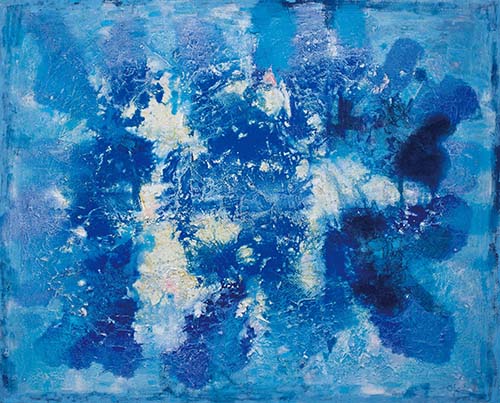
Growth_162.2x130.3cm_Oil on canvas_2026
시간은 변화를 의미한다. 작가는 이러한 변화를 작위적으로 주도하는 것이 아니라 순응하고 수용한다. 그러므로 화면에는 무작위의 수많은 현상이 펼쳐진다. 작가는 이중 자신에게 속한 것과 속하지 않은 것을 구분한다. 이것은 인간과 자연의 관계, 혹은 유한한 인간의 한계와 어떤 절대자와의 관계를 확인하는 의식과도 같은 것이다. 이러한 변화의 과정은 무수한 선택에 놓이게 된다. 작위를 덜어내고 나에게 속한 것을 멈추는 순간이 바로 작품의 완성이며, 그 순간이 바로 작가의 안목을 결정하는 것이다. 물감이 말라가고 작가의 필치가 더해지는 가운데 우연과 필연이 교차하며 화면은 점차 깊이를 지닌 유기체적 생명체, 즉 작품으로 탄생하게 되는 것이다.
작가의 화면은 대체로 푸른색(blue)을 주조색으로 한다. 푸른색은 그 자체로 많은 의미와 상징을 가진다. 청춘, 청운의 꿈, 파랑새와 같이 꿈과 희망을 의미하기도 하지만, 무엇보다도 푸른색은 생명의 색이다. 작가의 푸른색은 바로 푸른색이 주는 맑음과 안온함, 그리고 건강한 생명에 대한 기원으로 읽힌다. 작가는 일상의 소소한 것들에 대한 감사를 기록함으로써 이를 통해 안온한 치유의 기도를 구체화하는 것이라 해석할 수 있다. 놀이와도 같은 천진하고 욕심 없는 마음, 그리고 시간과의 대화를 통해 가늠하기 어려운 곳으로부터의 메시지를 확인하고 작위적인 것을 최소화하며 자연의 변화를 수용해 냄은 현상을 통해 본질에 도달하는 과정이라 해석할 수 있다. 작가의 일상에 대한 섬세하고 직관적인 감정의 표현, 그리고 삶에 대한 애정과 감사의 기도를 통한 안온한 치유의 바람은 작품이 기능할 수 있는 선한 영향력의 본질이라 말할 수 있다. 작업에 대한 진지함과 삶과 생명에 대한 따뜻한 시각, 그리고 이지적이고 합리적인 작업 방식은 앞으로 그의 작업에 대한 기대를 갖게 하기에 충분하다.
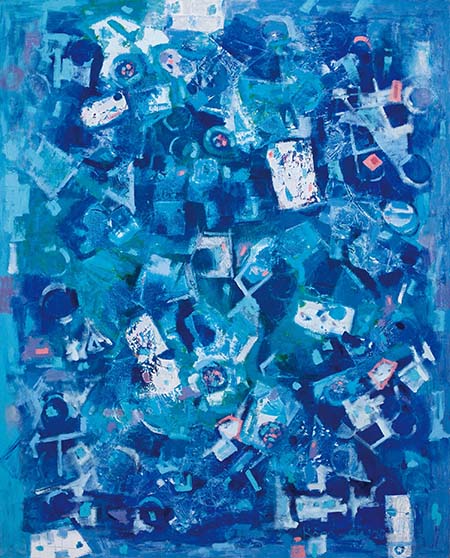
Growth_130.3x162.2cm_Oil on canvas_2026
Dialogue with Time, A Prayer for Serene Healing
Kim Sang-cheol
Former Professor at Dongduk Women's University, Art Critic
The artist's work is impressive for the intense visual stimulation emanating from unrestrained and dazzling planes of color. While it possesses the typical form of abstraction that does not reveal specific objects or situations, it does not appear that the artist is particularly conscious of this form. It would be more accurate to describe it as an expression of the essential nature manifesting from within the artist's inner self. To that extent, the artist's work is so diverse and multifaceted that it can be regarded as a record of distinct sensibilities and individual consciousness, rather than being defined by a specific form or framework.
This mode of work is often described as "mental imagery" or "expression of mental imagery." A mental imagery, literally, refers to a phenomenon acquired through the senses that is reproduced within the mind. The artist states that the greatest driving force behind her work is the recording of the trivial things observed in daily life. In a sense, these records of daily life are filtered and edited through the artist's inner self, ultimately manifesting as a unique, emotional expression of color. In fact, the artist's canvases are unrestrained, free, and uninhibited. This is a unique aesthetic constructed through a series of processes based on the expression of intuitive emotion. The artist states that he treats his work as if it were play. The characteristic of play is purposelessness. It is free because there is no purpose, and unconstrained because there is no attachment.
In fact, this artistic perspective and method are closely connected to Eastern thought. Play is often expressed as *yu* (遊), which represents a state of freedom that transcends all secular values, including gains and losses. To reach this state, a necessary process is naturally required to transcend secular values. This typically involves *simjae* (心齋) and *jwamang* (坐忘)-that is, sitting with a calm and orderly mind while completely forgetting everything. The artist likely performs this process through a calm and affectionate gaze toward daily life and prayers of gratitude. Through this, he seeks to affirm his existence and hopes that the inner peace derived from it will manifest as a positive influence. The artist's work is free, diverse, and unrestrained, defying definition by specific form or content. However, while unrestrained, his work is not chaotic; while free, it is not disorderly. This is believed to be because psychological conditions, represented by play, are presupposed prior to the pursuit of form or the desire for sculptural perfection. Therefore, the artist's canvases display an aesthetic of harmony and balance that seeks a certain order and unity. In other words, the artist's work can be described as a sincere and intimate record of daily life composed of colors that possess order.
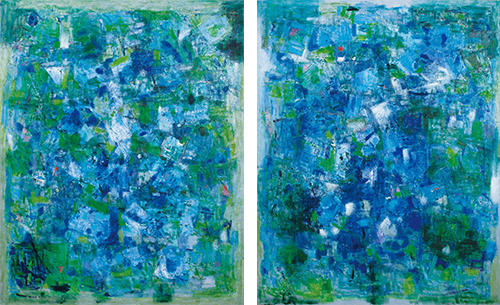
Growth_130.3x162.2cm_Oil on canvas_2022 (좌)
Growth_130.3x162.2cm_Oil on canvas_2022 (우)
The artist bases his work on traditional oil painting. The deliberate choice of oil painting, despite the development of the effective and convenient material known as acrylic, stems from the issue of weight and depth captured by the artist's delicate sensibility. Oil paint dries slowly. While this could be considered a drawback or inconvenience, the artist instead seeks to encounter time through it. That is, by sitting face-to-face with the canvas during the drying process and engaging in a silent dialogue, he seeks new inspiration within the results of the creative process. The artist's canvases are very thick. This is because, through these very processes, inspiration upon inspiration overlaps with the result of finding a picture within a picture. It is the act of seeking the invisible through the visible.
Time signifies change. The artist does not artificially drive this change but rather adapts to and accepts it. Therefore, countless random phenomena unfold on the canvas. The artist distinguishes between what belongs to them and what does not. This is akin to a ritual confirming the relationship between humans and nature, or between the limitations of finite humans and some absolute being. This process of change places one in countless choices. The moment one strips away artificiality and pauses what belongs to oneself is the completion of the work, and that very moment determines the artist's discernment. As the paint dries and the artist's brushstrokes are added, chance and necessity intersect, and the canvas gradually gives birth to an organic life form possessing depth-that is, the artwork.
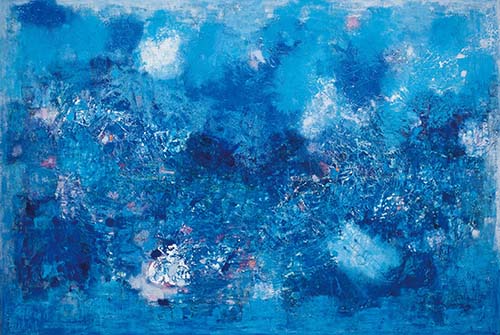
Growth_193.2x130.3cm_Oil on canvas_2026
The artist's canvases generally feature blue as the dominant color. Blue itself holds many meanings and symbols. While it signifies dreams and hope, such as youth, lofty dreams, and the bluebird, above all, blue is the color of life. The artist's use of the color blue is interpreted as a prayer for healthy life, embodying the clarity and tranquility that the color evokes. It can be interpreted that the artist concretizes a prayer for peaceful healing by recording gratitude for the small things of daily life. An innocent and selfless mind akin to play, combined with a dialogue with time to confirm messages from unfathomable places, and the acceptance of natural changes while minimizing artificiality, can be interpreted as a process of reaching the essence through phenomena. The artist's delicate and intuitive expression of emotions regarding daily life, along with the desire for peaceful healing through prayers of affection and gratitude for life, can be described as the essence of the positive influence through which the artwork functions. The seriousness with which he approaches his work, his warm perspective on life and existence, and his intellectual and rational working method are sufficient to generate anticipation for his future endeavors.
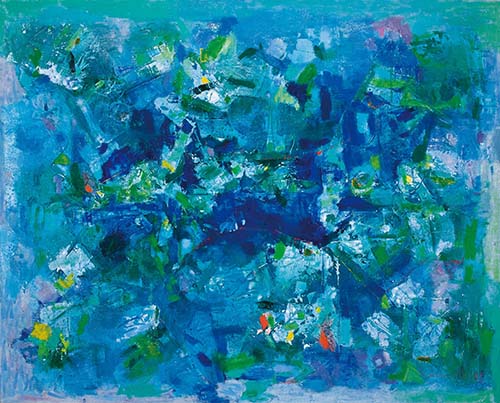
Growth_162.2x130.3cm_Oil on canvas_2025
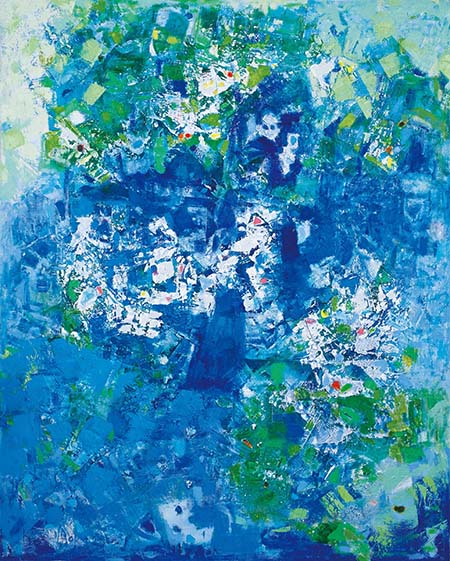
Growth_130.3x162.2cm_Oil on canvas_2025
■ 김규옥 | KIM, GYO-OK
개인전 | 11회 | 1998 1회 개인전 (관훈갤러리) | 2008 2회 초대전 (O2 갤러리) | 2012 3회 개인전 (Bandi Trazos, 상해) | 2013 4회 개인전 (바움아트갤러리) | 2014 5회 개인전 (한국미술관) | 2018 6회 개인전 (한국미술관) | 2019 7회 초대전 (메이준갤러리) | 2022 8회 개인전 (갤러리 이즈) | 2023 9회 개인전 (구성성당) | 2025 10회 개인전 (구성성당) | 2026 11회 기획전 (동덕아트 갤러리)
수상 | 대한민국 미술대전 입선 | 창작미술협회 공모전 특선 | 동아국제아트페스티벌 특선 | 여수국제아트페스티벌 특선 | 무등미술대전 특선 | 한국여성미술 공모전 특별상 | 현대미술대전 특선
단체전 다수
현재 | 한국미술협회, 한일창작협회, 한국여성작가협회, 한국예술인 회원
E-mail | kgo107@naver.com
* 전시메일에 등록된 모든 이미지와 글은 작가와 필자에게 저작권이 있습니다. *
vol.20260527-김규옥 展